Circa 300–100 BC
probably Hellenistic Egypt (under Greek rule)
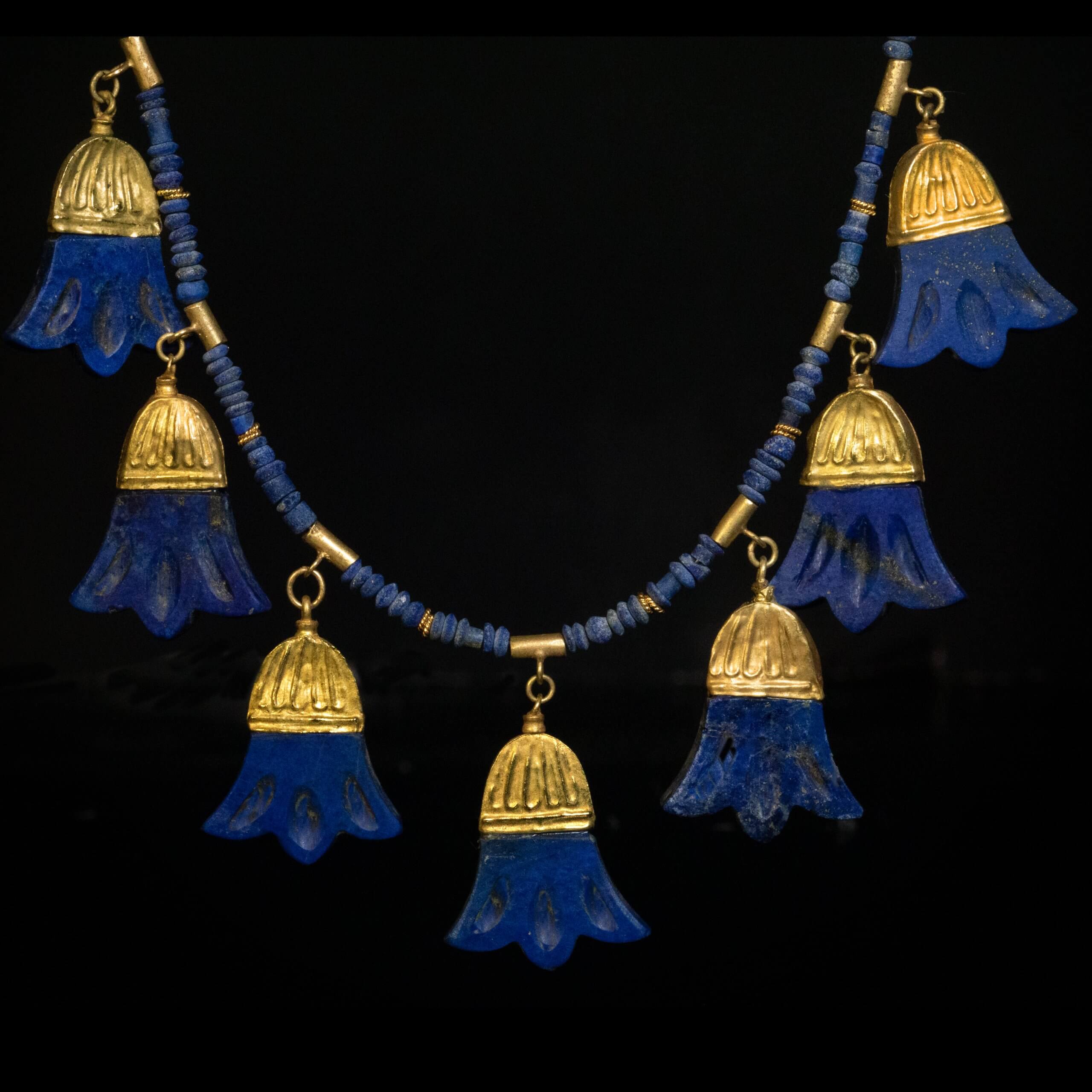
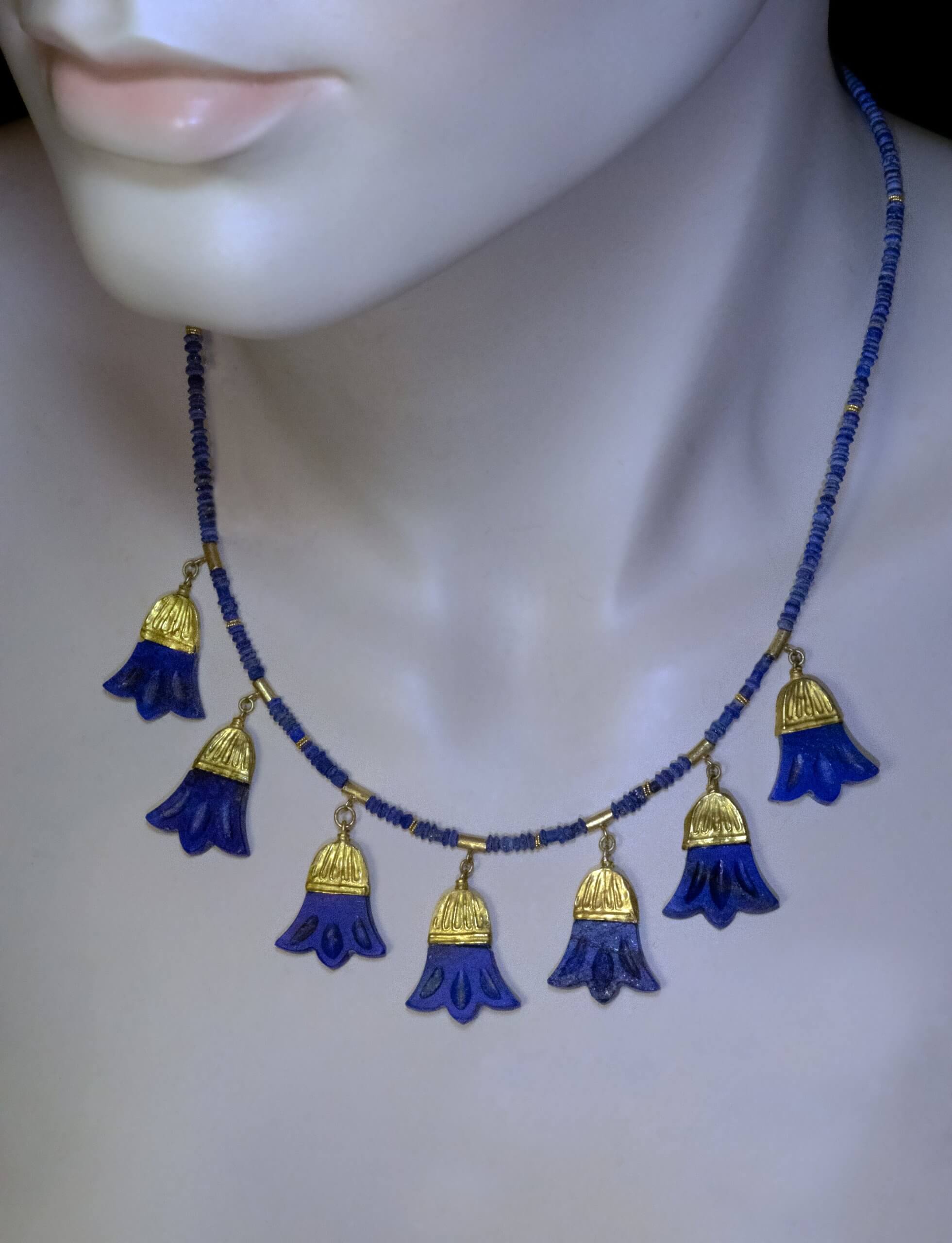
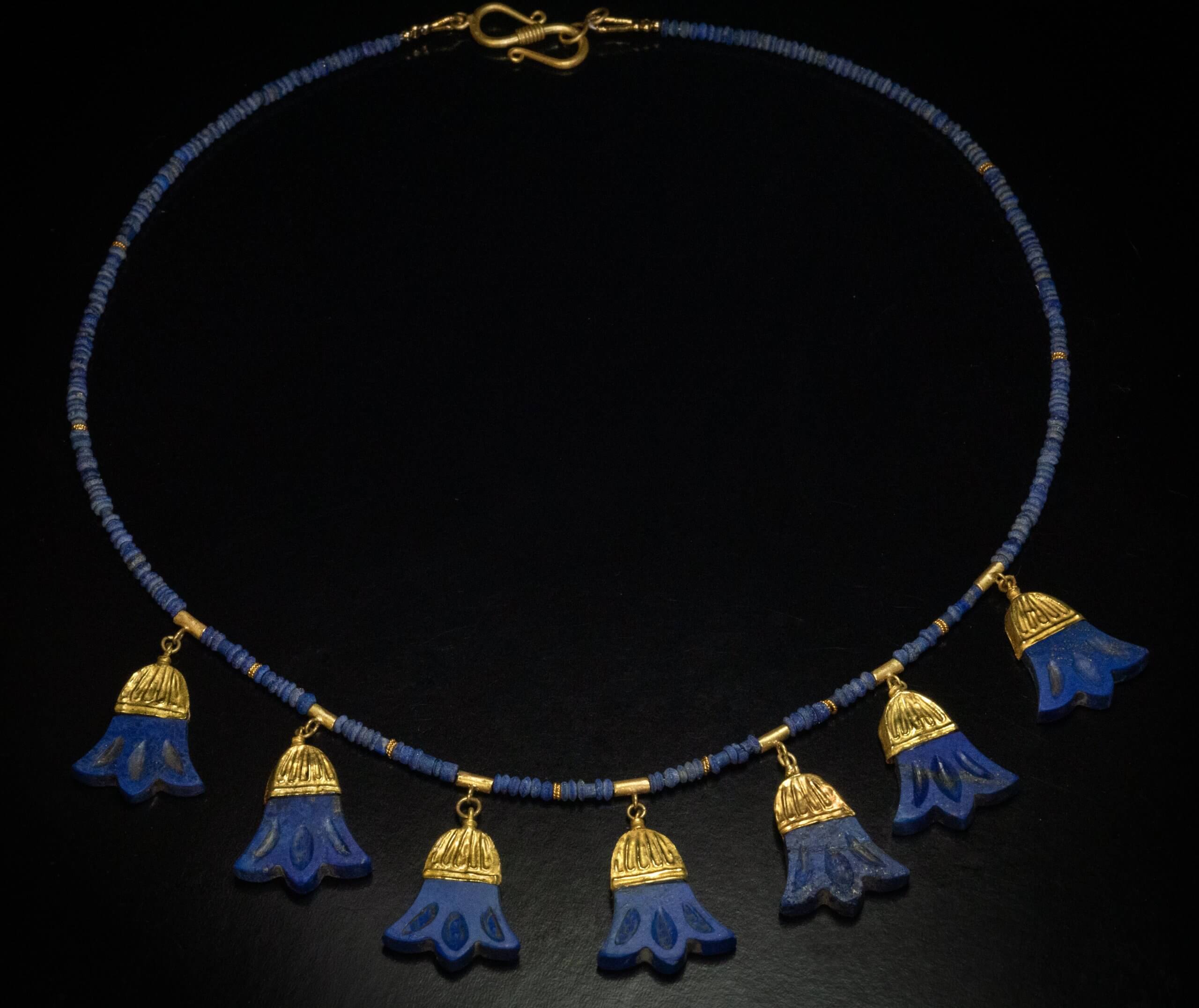
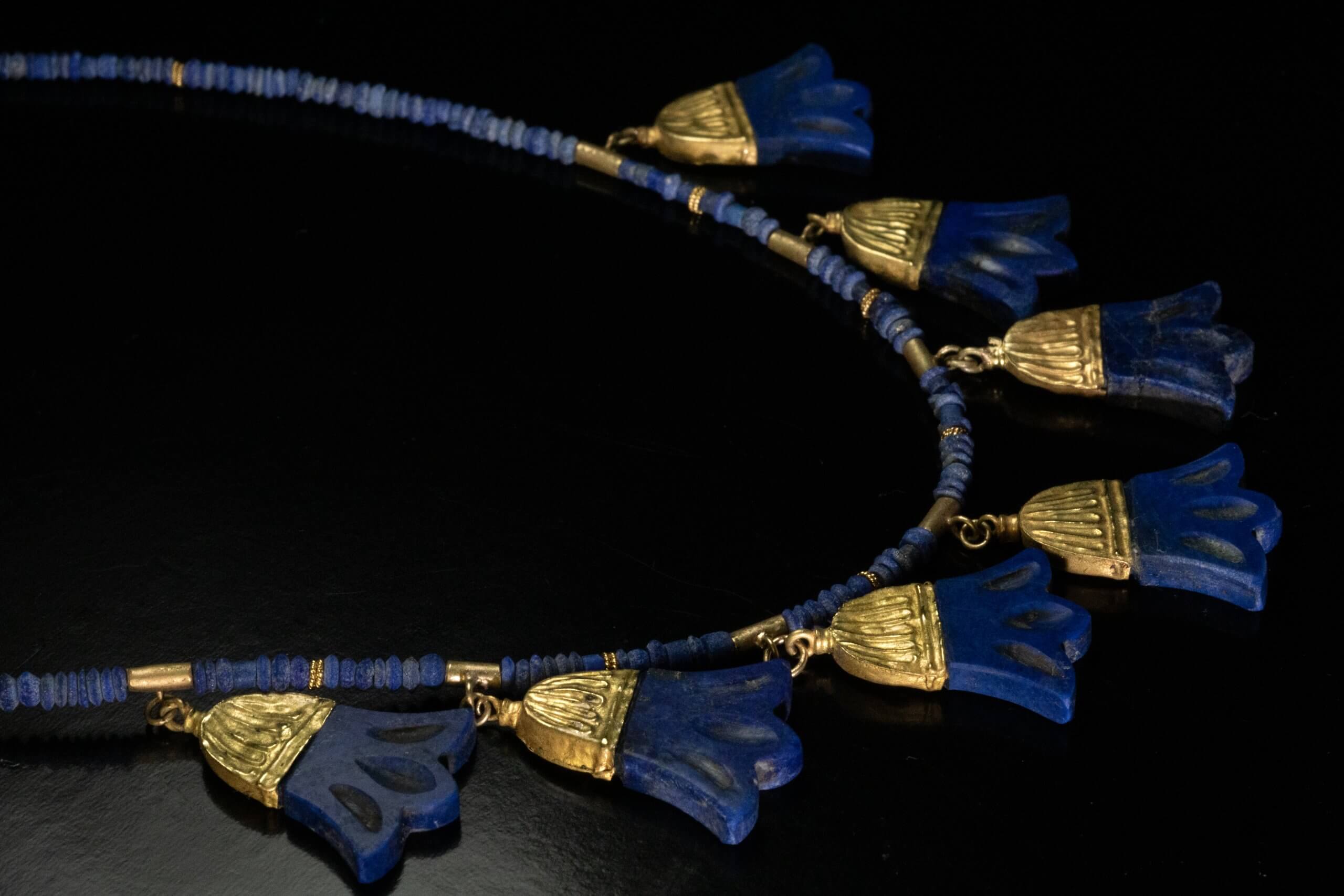
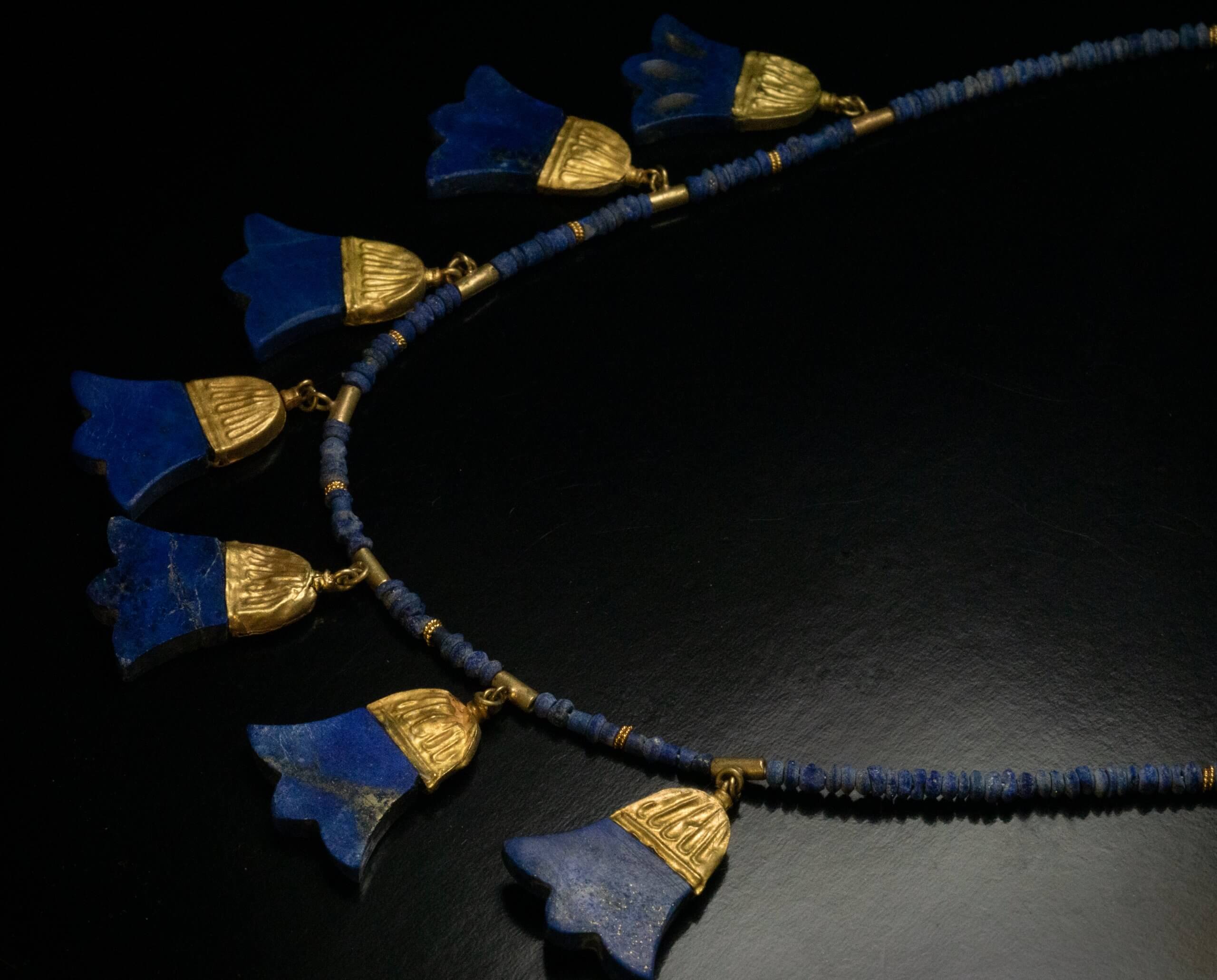
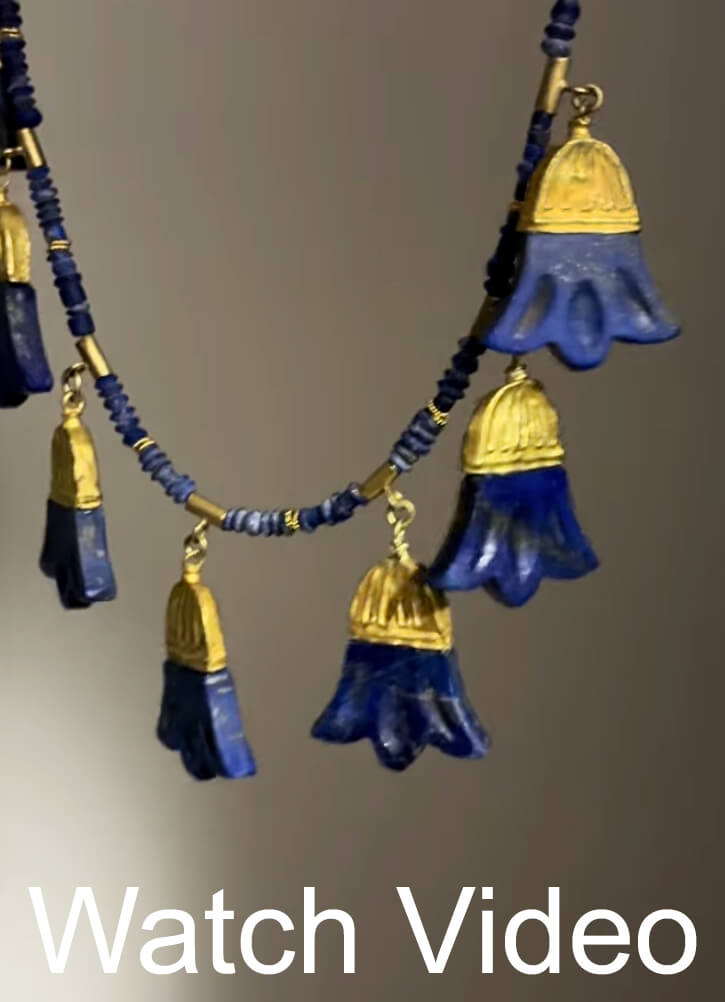
This striking ancient necklace exemplifies the cultural synthesis of Hellenistic Egypt, where Greek aesthetics merged with long-established Egyptian artistic traditions. It is composed of a lapis lazuli bead necklace accented with gold wire and tubular spacers, from which seven stylized lotus pendants are suspended.
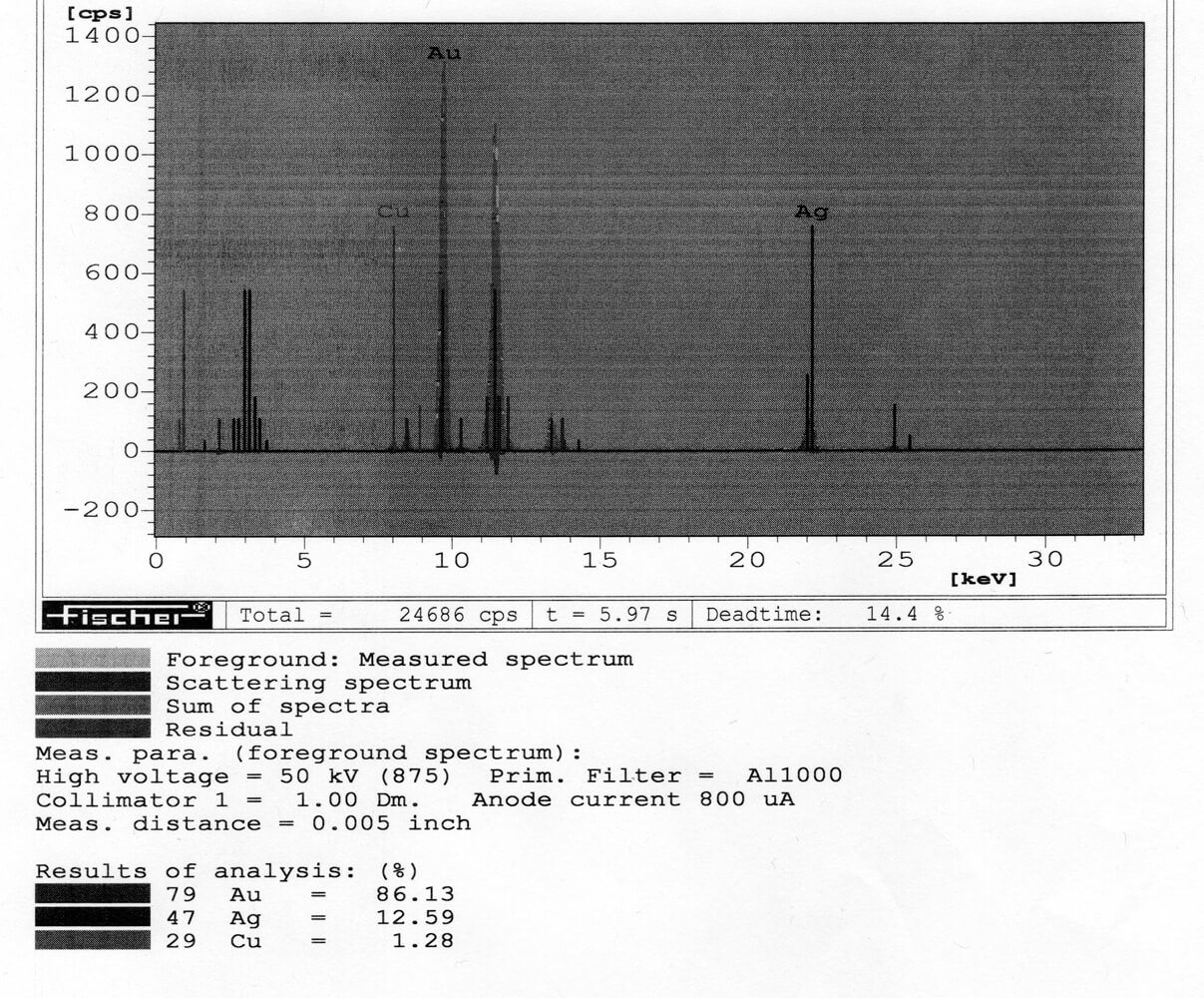
Each lotus pendant is finely carved from deep blue lapis lazuli and crowned with high karat (approximately 20.67 Kt) gold caps fashioned from rolled sheet gold. The caps are embossed with a classical Greek fluted motif, an elegant detail that contrasts beautifully with the distinctly Egyptian lotus form, a powerful symbol of rebirth and regeneration.
Lapis lazuli, an exotic and highly valued material in antiquity, was imported from Afghanistan and widely favored in Egypt and the Near East. The lotus pendants reflect Egyptian artistic tradition, while the fluted gold mounts point to classical Greece, illustrating the cultural synthesis characteristic of Hellenistic Egypt.
Restrung in modern times with a nylon cord. The gold caps securing the pendants have been stabilized with modern jeweler’s adhesive. The high karat gold clasp is modern.
Metal analysis: 86.13 % gold, 12.59% silver, 1.28% copper.
A remarkable example of ancient jewelry over 2,000 years old, preserved in fully wearable condition.
Length is 17 in. (44 cm)
The pendants measure approximately 7/8 x 6/8 in. (22 x 17 mm)